Big Dad: A Graphic Design Asset for Crafts and Creative Projects
As a designer with years of experience in branding, marketing visuals, and digital design assets, I always approach new creative products with a critical eye. Big Dad, described as a Father’s Day SVG design, caught my attention not just for its seasonal relevance but for its potential to enhance real client projects across multiple mediums. This is more than a simple clipart or illustration—it’s a versatile graphic design asset that could serve as a key element in a range of commercial design applications.
The First Impression: A Warm, Playful Visual Mood
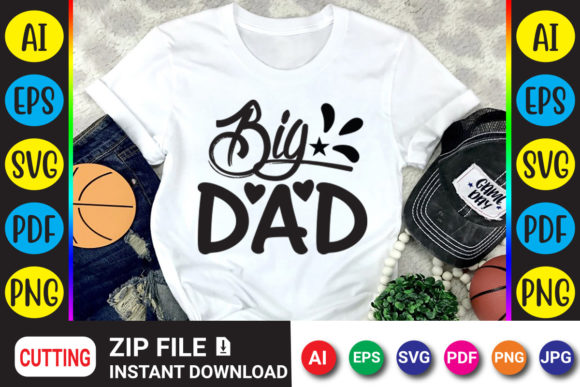
From the first glance, Big Dad exudes a warm, playful energy. The design feels handcrafted, with a casual yet polished look that suggests it was created with care. It has a friendly, approachable vibe that would fit well in handmade businesses, small business branding, or seasonal campaigns. The style leans toward a modern design aesthetic, blending simplicity with character—perfect for a brand looking to connect emotionally with its audience.
This visual mood makes Big Dad ideal for projects targeting families, dads, or anyone celebrating a special day. Its tone isn’t overly formal, which means it can be used in both casual and semi-professional contexts without feeling out of place.
Real-World Applications: From T-Shirt Design to Social Media Graphics
One of the most compelling aspects of Big Dad is how well it translates across different design formats. Whether you’re working on a t-shirt design, a product mockup, or a social media graphic, this SVG design holds up remarkably well. Its clean lines and recognizable shape make it easy to scale, ensuring it looks sharp whether it’s featured on a large poster or a small sticker.
For print-on-demand sellers and Etsy product creators, Big Dad could be a valuable addition to a design bundle. It works well as a sublimation design, a Canva template, or a Cricut project. Its vector format (SVG) allows for easy editing, making it adaptable for different color schemes, backgrounds, or typography pairings.
In packaging design, Big Dad could act as a decorative accent or a central motif. It might also work as a supporting brand element in a themed collection, helping to reinforce a cohesive visual identity across multiple touchpoints.
Where Big Dad Shines: Large Layouts and Themed Campaigns
Big Dad excels in large layout areas where it can command attention. It’s perfect for hero graphics, product mockups, or campaign visuals that need a strong, memorable image. Its size and clarity make it an excellent choice for editorial design, web design, or even as a background element in a digital ad.
When integrated into a themed collection—such as a Father’s Day line or a family-centric product launch—Big Dad adds a personal, emotional touch that resonates with the target audience. It can help elevate the overall visual mood, making the final design feel more polished and intentional.
Where to Use It Carefully: Minimalist Branding and Corporate Materials
While Big Dad is a strong design asset, it may not be the best fit for every project. In minimalist branding or professional corporate materials, its playful nature could clash with the desired tone. Similarly, in low-contrast designs or crowded layouts, it might lose its impact or become visually overwhelming.
For projects that require a very clean visual hierarchy, Big Dad could be too dominant. It’s important to consider how it interacts with other elements in the composition. If used in a complex background, it might not stand out as effectively as it should.
Impact on Readability, Brand Consistency, and Emotional Appeal
Readability is a key factor in any design, and Big Dad maintains good legibility even at smaller sizes. However, it’s important to test it in black and white and on both light and dark backgrounds to ensure it remains clear and effective in all scenarios.
When it comes to brand consistency, Big Dad can be a useful tool if it aligns with the overall visual identity. Its friendly tone can help build emotional appeal, making it ideal for brands that want to connect with their audience on a personal level. It can also increase audience engagement, especially when used in social media graphics or printable wall art.
For small business branding, Big Dad offers a way to add personality without sacrificing professionalism. It’s a great example of how a single design asset can influence the overall impression of a project, from the initial concept to the final delivery.
Practical Designer Notes: What to Check Before Using It Commercially
Before using Big Dad for a client project, there are several practical considerations to keep in mind. First, test it at different sizes to see how it scales. Preview it on real mockups to understand how it will appear in actual use.
Check the file formats—does it include PNG transparency? Is the SVG editable? These details matter when integrating it into a larger design workflow. Also, compare it with different font styles, such as serif, sans serif, script, or display fonts, to see how it complements or contrasts with text elements.
Finally, confirm the commercial license. Even though it’s described as a printable design or digital product, it’s essential to verify that it can be used for client projects without legal issues. For designers working with print-on-demand or Etsy products, this step is crucial.
Conclusion: A Versatile Asset for Creative Professionals
Big Dad is more than just a Father’s Day SVG design—it’s a flexible graphic design asset that can support a wide range of creative projects. Whether you’re working on a handmade business, a seasonal campaign, or a small business branding initiative, this design has the potential to enhance your visual storytelling and elevate the final result.
Its friendly, approachable style makes it ideal for projects that aim to connect with audiences on an emotional level. With proper testing and consideration, Big Dad can be a valuable addition to any designer’s toolkit, offering both aesthetic appeal and practical usability in real-world client work.